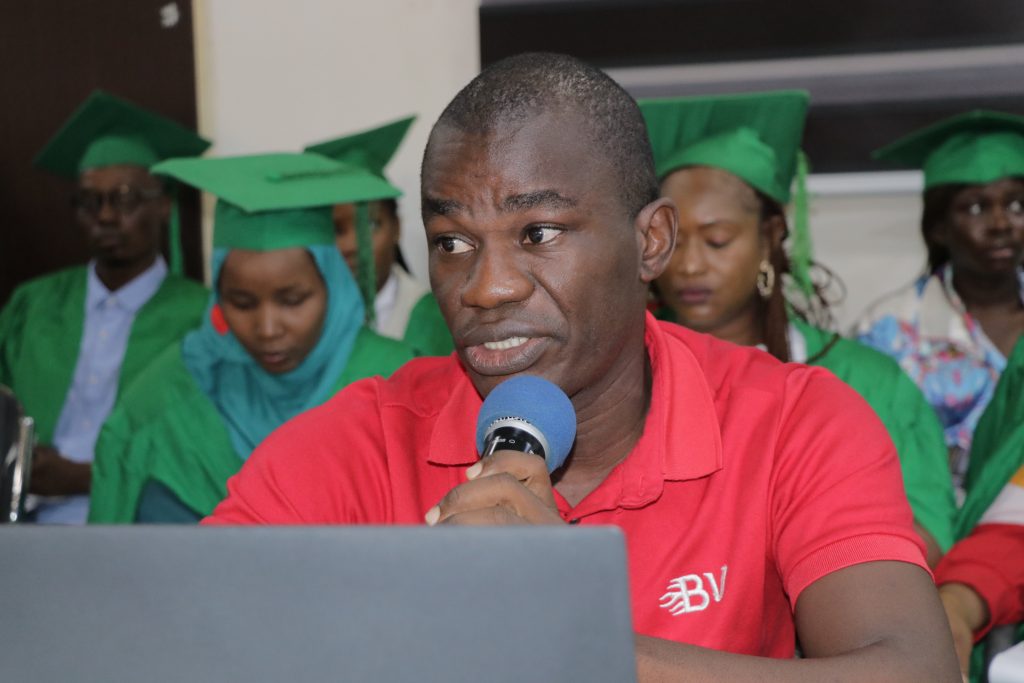
 Picture this for a moment.
A young graduate walks across the stage wearing a black academic gown. The audience erupts in applause as proud parents struggle to hold back tears. Friends take endless photographs, lecturers shake hands, and relatives offer prayers and congratulations. It is one of the happiest moments in the life of that graduate because it represents years of sacrifice, sleepless nights, countless examinations, financial struggles, and unwavering hope. For many families in Nigeria, graduation is not merely a ceremony; it is the fulfilment of a dream. Some parents sold pieces of family land to pay tuition fees. Others borrowed money, worked multiple jobs, or sacrificed personal comforts because they believed education was the surest investment they could make in their children’s future. Everyone leaves the ceremony convinced that a brighter tomorrow has finally arrived.
But then reality begins to unfold.
Days become weeks. Weeks become months. Months quietly become years. The graduation photographs gradually disappear from social media timelines. The congratulatory messages stop arriving. The academic gown is carefully folded and stored away. The certificate is placed inside a protective envelope, waiting for the opportunity it was supposed to create. Yet that opportunity never seems to come. The graduate sends application after application, modifies the curriculum vitae repeatedly, attends interviews, writes aptitude tests, learns new software, applies to companies across different cities, and waits anxiously beside the phone for a call that never comes. Sometimes rejection emails arrive politely. Sometimes there is complete silence. Eventually, society begins to attach a painful label to that young person.
“Unemployable.”
It is a word that carries enormous emotional weight. It quietly suggests that the graduate is somehow inadequate, incapable, or responsible for their own circumstances. Yet before we accept that conclusion, perhaps we should ask ourselves a much more honest and uncomfortable question.
Whose failure is it really?
Is it the graduate’s failure for leaving university without the knowledge, confidence, and practical skills employers are looking for? Is it the university’s failure for producing graduates who understand theories but struggle to apply them in real workplaces? Is it the employer’s failure for expecting five years of experience from someone applying for an entry-level position? Is it the government’s failure for creating an economy where the number of graduates continues to grow much faster than the number of quality jobs? Or have all of us—parents, teachers, universities, employers, policymakers, and even graduates themselves—contributed in one way or another to building a system that celebrates certificates far more enthusiastically than competence?
For decades, we told our children a simple story. Study hard. Pass your examinations. Gain admission into a university. Graduate with a good degree. Complete your National Youth Service. Get a good job. Build a successful life. That story inspired millions of young Nigerians to persevere through enormous hardship. It encouraged families to invest everything they had in education because they genuinely believed that a university degree was the passport to a better future. In many homes, parents repeatedly reminded their children that education was the one inheritance nobody could ever take away from them. But somewhere along the way, the relationship between education and employment became far more complicated.
Today, many graduates discover that after spending four, five, or even six years in higher education, employers are asking questions they never expected.
They are no longer asking only, “What class of degree did you graduate with?”
Instead, they ask questions such as:
- “Can you solve problems independently?”
- “Can you analyse data?”
- “Can you communicate clearly with clients?”
- “Can you work effectively in a multidisciplinary team?”
- “Can you manage projects?”
- “Can you use Artificial Intelligence responsibly?”
- “Can you adapt when technology changes?”
- “Can you continue learning after graduation?”
Suddenly, graduates realise that possessing a certificate and possessing employable skills are not always the same thing.
This growing disconnect is not merely a Nigerian conversation. The International Labour Organization has consistently identified skills mismatch as one of the major challenges facing labour markets across developing economies. In Nigeria specifically, the ILO notes that structural unemployment, weak labour market transparency, and persistent mismatches between the skills graduates possess and those employers require continue to limit employment opportunities. (International Labour Organization)
When we hear employers describe graduates as “unemployable,” we should pause before becoming defensive. Very often, employers are not questioning graduates’ intelligence. They are questioning whether graduates are ready for the realities of today’s workplace.
Those are two completely different conversations.
A graduate may remember complex theories, definitions, formulas, and academic concepts perfectly. They may even graduate with excellent grades. Yet when confronted with real workplace challenges that require collaboration, creativity, communication, leadership, emotional intelligence, critical thinking, adaptability, and digital competence, they may struggle—not because they lack intelligence, but because those skills received little attention throughout their educational journey.
Should we blame the graduate for that?
Or should we ask whether our educational system has spent too many years preparing students to pass examinations rather than preparing them to solve problems?
The World Bank has repeatedly highlighted that Nigeria’s education and skills ecosystem suffers from significant mismatches between what educational institutions produce and what the labour market actually demands. When universities produce graduates whose competencies fail to align with rapidly changing industries, everyone pays the price. Graduates remain unemployed or underemployed, employers complain about recruitment challenges, businesses spend additional resources retraining employees, productivity declines, and economic growth slows because valuable human potential remains underutilised. (World Bank)
Yet fairness demands that we also consider the realities facing our universities.
Many lecturers are expected to teach overcrowded classrooms with limited facilities. Laboratories often require modern equipment that institutions struggle to provide. Funding remains inadequate in many institutions. Research opportunities are limited. Academic staff frequently work under enormous pressure while trying to supervise projects, publish research, assess students, and maintain quality teaching.
Can we honestly expect universities to produce graduates for tomorrow’s economy while operating with yesterday’s resources?
- Perhaps the issue is not that universities have stopped teaching.
- Perhaps the world of work has simply changed much faster than universities have been allowed to change.
- Artificial Intelligence is transforming industries.
- Automation is replacing repetitive tasks.
- Remote work is connecting employers with talent across continents.
- The digital economy is creating careers that did not exist only a few years ago.
- Entire industries are emerging while others are disappearing.
- This reality raises another difficult question.
Can curricula designed several years ago adequately prepare students for jobs that did not even exist when those curricula were developed?
If the answer is no, then curriculum reform can no longer be treated as an occasional exercise carried out every decade. It must become a continuous process driven by collaboration between universities, employers, researchers, policymakers, entrepreneurs, and industry professionals.
Interestingly, the World Bank recently observed that today’s African graduates are among the most educated generations in history, yet they are entering a labour market that is significantly more demanding than that faced by previous generations. The institution points to four major challenges confronting graduates: a growing skills mismatch, an experience gap, unrealistic expectations on both sides of the labour market, and the need for stronger foundational thinking skills such as analytical reasoning, communication, adaptability, and continuous learning. (World Bank)
Employers themselves must also reflect honestly.
How often do we see vacancies labelled “Entry Level” only to discover that applicants must already possess three to five years of work experience?
How exactly is a fresh graduate supposed to acquire experience if nobody is willing to employ them first?
Is experience something people magically acquire before entering the workforce?
Or should organisations invest more deliberately in internships, graduate trainee programmes, apprenticeships, mentoring, coaching, and structured onboarding that allow young professionals to develop their potential?
This is not simply an education issue.
It is also a workplace issue.
Parents, too, cannot be left out of this conversation.
For decades, many families measured success by professional titles rather than by practical competence.
- Doctor.
- Lawyer.
- Engineer.
- Accountant.
- Banker.
- Civil servant.
Yet today’s economy increasingly rewards people who possess transferable skills, entrepreneurial thinking, digital competence, creativity, emotional intelligence, communication ability, resilience, and a willingness to keep learning throughout life.
- Have we unintentionally raised children who chase certificates more passionately than they pursue competence?
- Have we celebrated grades while paying too little attention to practical skills?
Perhaps it is time for all of us to redefine what educational success truly means.
Another reality we cannot ignore is that Nigeria’s graduate unemployment challenge is not caused only by skills mismatch. It is also deeply connected to the structure of the economy itself. Even highly competent graduates cannot all secure meaningful employment if businesses are not expanding, industries are not growing, investment remains low, infrastructure challenges persist, and job creation fails to keep pace with population growth. The World Bank has repeatedly emphasised that sustainable economic growth requires not only better education but also stronger job creation, more productive enterprises, and policies that encourage businesses to invest and expand. (World Bank)
This means the conversation should never become a simple debate about whether graduates are employable or unemployable.
The real issue is whether our education system, labour market, economy, and public policies are evolving together.
Because employability is never created by universities alone.
- Families shape attitudes.
- Schools build foundations.
- Universities deepen knowledge.
- Employers refine professional competence.
- Governments create enabling environments.
- Businesses generate opportunities.
- Graduates continue learning.
- Every one of these pieces must work together.
- The graduate who cannot find employment today may not simply represent individual failure.
- That graduate may be reflecting the strengths and weaknesses of an entire national system.
None of this suggests that graduates should stop investing in themselves. On the contrary, lifelong learning has never been more important. Professional certifications, internships, volunteering, entrepreneurship, digital literacy, Artificial Intelligence skills, communication skills, networking, project management, financial literacy, and emotional intelligence are becoming just as valuable as university degrees themselves. The graduates who thrive in tomorrow’s economy will likely be those who never stop learning after graduation.
Yet while graduates carry responsibility for their own development, we must stop pretending that they alone can solve graduate unemployment.
- Universities cannot solve it alone.
- Employers cannot solve it alone.
- Government cannot solve it alone.
- Parents cannot solve it alone.
- Graduates cannot solve it alone.
If one part of the system improves while every other part remains unchanged, the problem simply changes shape rather than disappearing.
Perhaps that is why the title of this conversation remains so important.
The Unemployable Graduate: Whose Failure Is It Really?
- Maybe the graduate is not the only one being examined.
- Maybe our universities are being examined.
- Maybe employers are being examined.
- Maybe government policies are being examined.
- Maybe our economy is being examined.
- Maybe our expectations as parents are being examined.
- Maybe even our society is being examined.
The question is no longer whether graduates are employable.
- The question is whether we are building a country where education, skills, opportunity, innovation, and economic growth move forward together.
- Until that happens, every graduation ceremony will continue to produce hope.
- But for far too many young people, hope alone will not be enough.
References
- International Labour Organization – Assessment of Public Employment Services in Nigeria
https://www.ilo.org/publications/assessment-public-employment-services-nigeria - International Labour Organization – Skills and Jobs Mismatches in Low- and Middle-Income Countries
https://www.ilo.org/publications/major-publications/skills-and-jobs-mismatches-low-and-middle-income-countries - World Bank – Building Skills, Creating Jobs, and Empowering Africa’s Future
https://www.worldbank.org/en/news/speech/2026/03/16/building-skills-creating-jobs-and-empowering-africa-s-future - World Bank – Current Deficits in Nutrition, Learning, and On-the-Job Skills Are Costing Children Born Today Half of Their Future Earnings
https://www.worldbank.org/en/news/press-release/2026/02/12/nigeria-human-capital-nutrition-learning-skills-deficits-reduce-future-earnings - Yetunde Aluko (2014). Employers’ Perceptions of the Employability Skills of New Graduates in Nigeria
https://www.researchgate.net/publication/327020092_Employers%27_Perceptions_of_the_Employability_Skills_of_New_Graduates_in_Nigeria